Dance Pointe Academy Terms and Conditions
FEES AND PAYMENTS
- Class fees are charged on a per-class basis.
- The 2026/2027 academic year runs for 45 weeks over an 11-month period. This includes 6 weeks of holidays, meaning students receive a total of 39 weeks of classes throughout the academic year.
- Fees are structured across 11 monthly payments, commencing on the first day of term, 17 August 2026. Each monthly instalment will be taken on the same date each month from the payment card registered through the Class Manager portal.
- The easiest and most efficient way to pay is to register your preferred payment card through the Class Manager portal. Monthly payments will then be automatically taken on the 17th of each month from August 2026 to June 2027.
- We no longer accept bank transfer for class payments
- Parents/guardians may choose to pay the full academic year's fees in one upfront payment.
- Alternatively, parents/guardians may choose to pay for multiple months in advance by selecting the relevant months when making a payment.
- New students are required to pay a £10 registration fee which will be added onto your first monthly payment
- Students who enrol part-way through the academic year will be charged for the total number of classes remaining until the end of the academic year. The total fee will then be divided equally across the remaining monthly payment periods.
- A £4 late payment surcharge will apply to any invoice that remains unpaid more than 7 days after the invoice due date.
- Parents/guardians are responsible for ensuring that all fees are paid in full and on time.
- Where fees remain unpaid, the Academy reserves the right to suspend the student's attendance until the outstanding balance has been paid. Students will not be permitted to participate in classes while their account remains overdue.
- If you do not receive an invoice, please contact the School Director as soon as possible.
NOTICE PERIOD OF WITH DRAWL
- To withdraw your child from classes at Dance Pointe Academy Scotland Ltd, a minimum of four (4) consecutive weeks' written notice must be provided by email.
- During the four-week notice period, students remain fully entitled and are encouraged to attend all scheduled classes.
-Tuition fees remain payable in full throughout the notice period, regardless of whether the student attends the remaining classes.
REFUNDS AND DISCOUNTS
- Discounts on class fees are available to students/families who enrol in four or more classes per week.
- Refunds or discounts will not be provided for classes missed by a student, unless an alternative arrangement has been agreed with the School Director in writing by email.
- All fees are non-refundable unless otherwise agreed in accordance with these Terms and Conditions.
- In cases of long-term illness or injury, a refund or adjustment of fees may be considered at the discretion of the School Director. This does not apply to minor illnesses, short-term absences, holidays, or other planned periods of absence during the academic year.
MEMBERS PORTAL
- You will be expected to keep the members portal details up-to-date, including names of students, contact email address, emergency contact numbers, medical details of students, d.o.b. etc.
CLASSES AND ATTENDANCE
- In the rare event that a class is cancelled by the school, every effort will be made to reschedule the class, usually during a school holiday period.
- If a cancelled class cannot be rescheduled, the fee for the cancelled class will be deducted from the following term’s invoice.
- The school will not be held responsible for classes cancelled due to circumstances beyond its reasonable control, including adverse weather conditions or other events considered to be force majeure.
- Where a class is cancelled due to adverse weather conditions or force majeure, class fees will not be refunded. However, the school will make every reasonable effort to reschedule the class at a later date.
-Students must arrive on time for their scheduled class and must be collected promptly at the end of their class.
- Students should not be dropped off before their scheduled class time unless prior arrangements have been made with the school.
- Parents/guardians are responsible for their child until the scheduled class begins and again immediately after the class has ended. If a child is dropped off early or collected late, they may be required to remain inside the school premises; however, staff may be unable to provide direct supervision as they will be teaching other students.
- By leaving a child at the school before their scheduled class time or failing to collect them promptly at the end of their class, parents/guardians acknowledge that the child may not be fully supervised and accept responsibility for their child’s safety and wellbeing during this time.
For any questions regarding the Terms and Conditions, please contact the School Director, Julie de Havilland.
Dance Corrections
Dancing is a physical skill and to help and facilitate the Student’s learning, the teacher may physically guide a movement by touch.
This will always be done in a professional manner and the intention of the contact will be made clear.
Please contact the Director if you have any queries about this
Dance Uniform
We ask all students to wear the recommended uniform for each class.
The uniform ensures students look and feel confident in their surroundings.
You can find details of the uniform for all classes on the members pack.
Benefit of wearing the uniform in class
Safety
Hair should be tied away from the face so dancers can see instructors and each other at all times, and to ensure that a dancer’s movements are not restricted by unsecured hair.
Jewellery should be minimised for the safety of the dancers and those around them.
Dance attire should be fitted to the body so instructors can clearly see the dancer’s form and technique, making technical adjustments when necessary, as proper dance technique protects dancers from injury.
Identity
At DPA, when students come into the studio, they can leave behind the stress of the day and identify themselves as dancers.
An entire field of study is dedicated to the “psychology of the uniform” and how clothing impacts our perception of ourselves and the role we are in and helps dancers perform their best.
Community
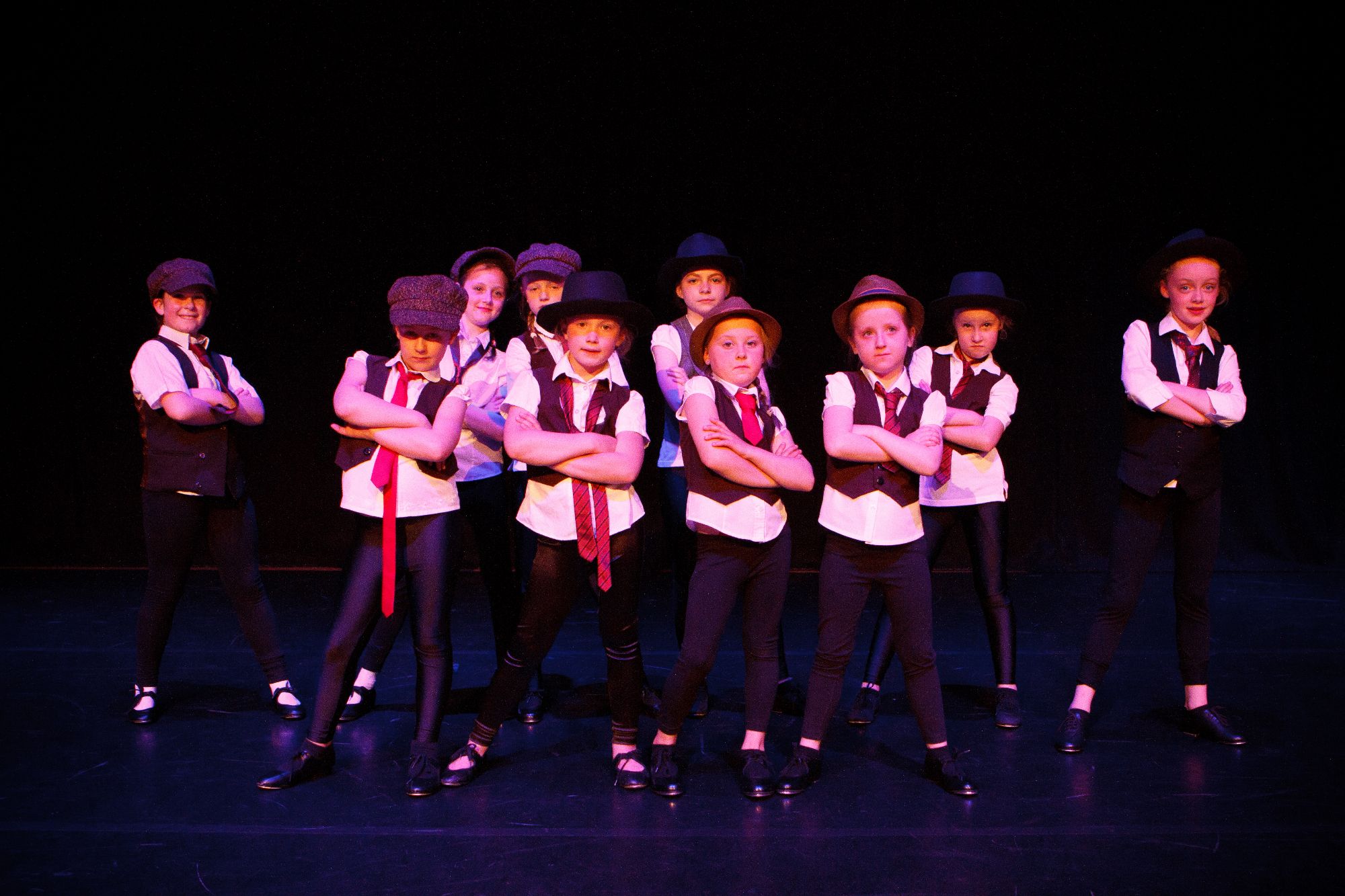
Dancers who dress alike see themselves as part of something larger. Watch your favourite sports teams – from uniform, to shoes, to warm-ups, their clothing is identical.
A simple, practical dress code creates a sense of belonging and community among dancers. They don’t preclude individual contributions; all dancers are still invited to be uniquely themselves.
A uniform dress code contributes to a setting in which each dancer takes joy in seeing everyone succeed together and feels connected to their fellow classmates.
Learning
The dress code reduces distractions and facilitates learning. When dressed uniformly dancers do not feel the need to adjust their clothing or compare their outfits to others in class.
Focus and discipline are enhanced, and dancers can move in unison more easily as they see everyone else is moving the same way.
Likewise, instructors can more easily identify when a correction needs to be made